Botanical Engagement Manager

A part-time engagement proposal for Mariia Kovalova from Sponic Gardens

Refer to Best Practices for Working at Sponic Gardens

01 The Role

Botanical Engagement Manager

A part-time engagement to help Sponic Gardens build its first botanical program — turning ideas into a real, research-backed vibe growing pilot that members can experience. Please also refer to Best Practices for Working at Sponic Gardens.

Rate
60 PLN gross / hr
~4,800–5,200 PLN / month
Time
~20 hrs / week
Part-time, unless otherwise agreed
Phase 0
Pre-venue
Pilot the garden setup off-site
Phase 1
On-site
Deploy systems, activate community
Equity
0.5%
Future-equity promise, vesting over 24 months
02 The Project

What we are building

Sponic Gardens is an AI-native community center with a botanical theme. We are building a program called vibe growing — practical, community-facing experiences built around real plants. Members grow, observe, taste, care for, and connect with living plants as part of the Sponic community.

The core goal is twofold: First and most urgently, creating meaningful experiences for members in a collaborative, nature-driven environment — and second, automating the process of cultivating plants for use in the member experience leveraging activities with AI including: measuring conditions, analyzing data, and optimizing our systems. This role sits at the center of both.

Team collaborating in the garden
03 AI Onboarding

AI tools setup & onboarding

Before anything else, get fluent with the AI tools we build with every day. This is the foundation that makes the rest of Phase 0 possible — research, automation, content, and coordination all run faster once these are in place.

  • Get fluent with Claude Code and Codex — installed on your machine, signed in, and used daily for research, drafting, planning, and operational tasks
  • Adopt vibecoding — use AI to assemble small scripts, automations, and tools for grow tracking, supplier research, and care logging without needing to be a software engineer
  • Stand up camera automation — set up phone/USB camera capture for the first grow zone, schedule snapshots, and route photos into the Sponic platform
  • Get set up on the Sponic platform and communication channels; learn the existing AI grow-coach prompts and image pipeline
  • Review the Botanical Ideation concept document, the Best Practices for Working at Sponic Gardens, and existing research
  • Meet the team and align on working rhythms and expectations
04 Phase 0 Responsibilities

Pre-venue pilot

Before we have a permanent location, the work is about piloting the garden setup — researching, sourcing, building the first systems, observing how they perform, and designing the activities that members will eventually experience.

Pick the first engagement to test

  • Decide which botanical engagement to start with — for members on-site (micro-harvests, terrariums, tea gardens, flower duels, plant recovery quests…) and/or for non-members participating remotely (offsite, mail-kit, photo-and-AI-coached). Pick the one most likely to delight real users now.
  • Design the full lifecycle and user engagement journey around that engagement — sign-up, first touch, what arrives, what they do daily, how they share progress, what success feels like at the end
  • Bring it to real users quickly — recruit a small group, ship a v1, and measure how compelling it actually is
  • Iterate or scrap fast — optimize what's working, drop what isn't, try a different engagement type if needed. The goal is real production use with users who are doing this because they want to
  • Likely free to start; we will likely buy all the supplies for early participants

Research and sourcing (in service of the chosen engagement)

  • Research plant species fit for the chosen engagement type — narrow, not exhaustive
  • Identify Warsaw/Poland-based suppliers for plants, seeds, substrates, containers, and equipment — and where mail-out is in scope, confirm shipping logistics
  • Build a purchase plan with prices, substitutes, and lead times sized to the pilot

Systems setup and observation (just enough to support the pilot)

  • Set up the first grow zone or kit-assembly area — lights, irrigation, sensors, climate tracking, camera capture
  • Own the daily rhythm: watering, light checks, care notes, photos, and issue tracking — automated where possible
  • Observe how hardware, software, and the AI grow-coach interact; identify gaps and iterate
  • Notice problems early: pests, mold, overwatering, missing supplies, safety concerns
  • Document protocols clearly enough that another operator could repeat the grow

Go-to-market for the Phase 0 product

  • Own the launch end-to-end — narrative, marketing collateral, marketing activities, business development, social media, and anything else needed to get the Phase 0 product into the hands of real users
  • Write the story of the engagement — landing copy, participant emails, posts, short videos — and keep it consistent across channels
  • Run business-development outreach to recruit the first cohort and partners (Warsaw botanics community, online AI-and-plants enthusiasts, friendly testers)
  • The team is available to train and assist on any of this — design, copy, AI tooling, ops, supplier logistics — ask early and often

Run the engagement with real users

  • Launch the chosen engagement to a small group of real users (members and/or remote non-members) and run it end-to-end
  • Collect direct feedback, usage signals, and photos; decide weekly whether to optimize, expand, or pivot
  • Build connections with Warsaw's botanics enthusiast community — find the people, clubs, and events that can become early users and collaborators
  • Drive social media to gain global exposure — turn the daily grow rhythm and pilot moments into a steady content stream (Instagram, TikTok, X) so the engagement reaches a global audience from day one
  • Pitch in on adjacent startup needs as they come up: vendor calls, events, member interviews, setup, cleanup, and operational checklists
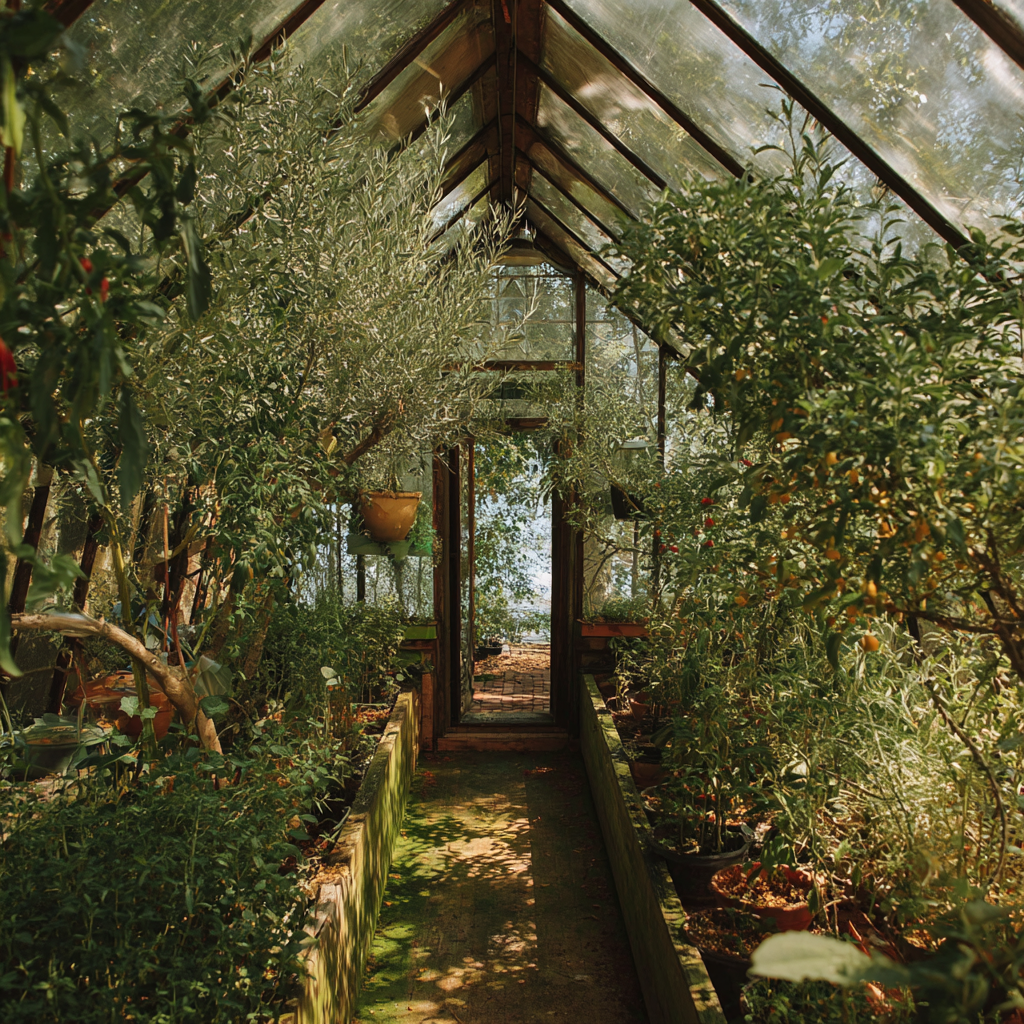
Greenhouse interior
05 Phase 1 Responsibilities

Venue Based Activation

Once we secure a long-term venue, Phase 1 is about deploying what the pilot proved — setting up systems in the space, bringing members in, and gradually activating the community around botanical cultivation.

Location setup

  • Transfer and adapt pilot systems to the permanent space — grow zones, equipment, infrastructure
  • Scale from pilot to operational: more species, more grow points, refined care protocols

Community activation

  • Enhance member-facing botanical experiences based on pilot-tested learnings
  • Coordinate botanical activities — workshops, tastings, planting sessions, open garden hours
  • Nurture connections with the global AI botanical enthusiast community

Systems optimization

  • Monitor plant health, environment conditions, and system performance at scale
  • Continue honing the hardware/software loop — sensors, data, AI-driven recommendations
06 Deliverables

What each phase should produce

Phase 0 — Pre-Venue Pilot

i.
Chosen engagement & user journey
A clearly-defined first botanical engagement (member on-site and/or non-member remote) with a documented end-to-end user journey — sign-up, first touch, what they do daily, what success feels like at the end.
ii.
Live pilot with real users
A small cohort of real users actually doing the engagement because they want to — running, observed, and iterated on weekly. Free to participate; we cover supplies.
iii.
User feedback & engagement signal
Direct feedback, usage data, photos, and a clear read on how compelling the engagement is — with a recommendation to keep, optimize, or pivot to a different engagement type.
iv.
AI-tooled operating rhythm
Claude Code, Codex, vibecoded scripts, and camera automation set up and used daily to run the pilot — care logging, photo capture, supplier research, and participant updates automated where possible.
v.
Sourcing & care, sized to the pilot
Supplier list, purchase plan, and care protocols scoped to the chosen engagement — narrow, repeatable by another operator, not exhaustive.
vi.
Community & social presence
Live connections with Warsaw's botanics community plus a steady social-media stream (Instagram/TikTok/X) turning the pilot into global exposure from day one.

Phase 1 — On-Site Activation

i.
Location deployment plan
How to transfer pilot systems to the permanent space — equipment placement, infrastructure needs, scaling decisions.
ii.
Community launch
First member-facing botanical experiences running on-site, with participant feedback and iteration notes.
07 Working Culture

How we work

Sponic Gardens is a startup built from zero. We value people who take ownership, communicate openly, and work across disciplines — plants, hospitality, design, software, community.

Initiative
Take action rather than waiting for every instruction
Open communication
Speak up when something is unclear or blocked
Cross-discipline
Plants, hospitality, design, software, community
Documentation
Work clearly so the next person can build on it
Harvesting botanicals
08 AI-Native

Built with AI

Sponic Gardens is an AI-native startup. All team members use AI tools as part of everyday work — research, planning, documentation, and task execution.

You will coordinate with software work: AI grow-coach behavior, photo timelines, care logs, and participant updates. We expect you to automate everything that doesn't require human effort — your time is for the work that needs botanical judgment, physical presence, and creative thinking.

Human and AI tending plants together
09 The Proposal

Engagement terms

Compensation

60 PLN gross per hour, approximately 20 hours per week, to be discussed based on the agreed upon priorities and deliverables.

In addition: a committed future-equity promise of 0.5%, vesting monthly over 24 months — converting into shares or equivalent options once Sponic Gardens has a share-issuing structure.

Engagement length

3 months. With the caveat that — because this is a startup — this may be unpredictable. The location could move from Warsaw if we cannot find a suitable situation rapidly in Warsaw.

Work reviews: Monthly for the first 3 months.

Compensation review: after 3 months if continued work is desired.

How we work

All work is logged in our internal system — tasks, hours, progress, and outcomes are tracked transparently on the Sponic platform.

We meet twice a week as a team — online or in person — and communicate asynchronously throughout the week.

Our shared playbook lives in Best Practices for Working at Sponic Gardens. This is a living document — every team member is expected to collaboratively edit, challenge, and improve it as we learn, so that the way we work keeps making the whole organization better.

What success looks like

An AI-automated botanical activity that has highly engaged users who love the experience of working with AI and botanical cultivation together. They may be remote, on-site, or a combination.

10 Next Steps

How we get started

  1. Review and agree
    Review this document, ask questions, get clarifications and discuss any potential changes if needed. Determine legal structure for payments, which is likely to best be from the US LLC (corporation) as a contractor of services. This may change once the Polish subsidiary is created.
  2. AI Platform Initiation
    Get set up on our AI development platform, and start using it to create the framework for Phase 0 activities.
  3. Product Development
    Create a prototype of a product that can be used first internally, then by friends, and then by random interested users. Turn this prototype into a beta and then a production system.

Sponic Gardens

Warsaw, Poland

Questions, thoughts, or ready to start? Reach out to us directly.

Email Sonia & Rahul View Mariia's CV